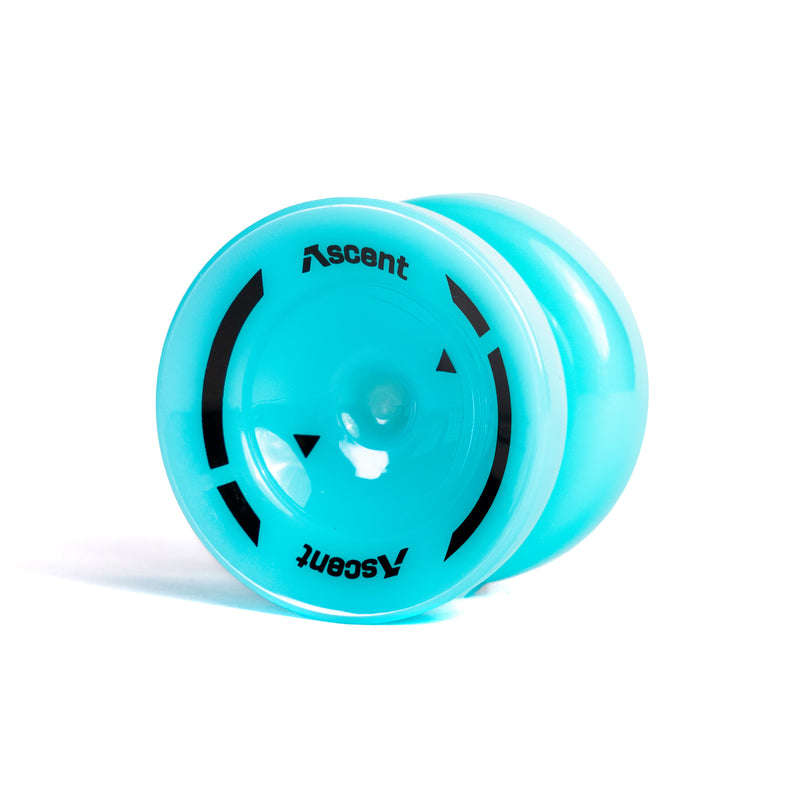
If you're asking why won't my yo-yo sleep, check four things: your string, the bearing, the response pads and your throw.
A responsive yo-yo is made to come back up when you tug it. If yours does that, it's working fine.
What a sleeping yo-yo should do
When a yo-yo sleeps, it spins at the bottom of the string and stays down there. That's the sleeper, and it's the base for every other trick.

There are two kinds of yo-yo. A responsive yo-yo returns with a small tug. An unresponsive yo-yo won't come back on a tug, so you bring it up with a trick called a bind. Unresponsive yo-yos spin longer and are less likely to shoot back up by accident. Our Ascent ships responsive and comes with an unresponsive bearing for when you're ready to switch.

Do the drop test
Before you fix anything, see how long it sleeps. Wind the yo-yo up tight. Hold your hand up, palm down, with the yo-yo lined up under it. Let it fall straight down and count how many seconds it sleeps before it dies. I show it in why doesn't my yo-yo spin long enough.

- Responsive yo-yo: at least 5 seconds is likely normal.
- Unresponsive yo-yo: at least 10 seconds is likely normal.
Responsive yo-yos always spin less than unresponsive ones. Test a few times. If yours sleeps longer than these numbers, it's likely okay. If your yo-yo tilts and leans, your times can be a bit off.
If it spins over a minute, keep going and practice your tricks. Longer spin times from there generally won't help you learn faster.

Some yo-yos are not made to spin long. The fixes below are for a professional yo-yo, like the ones we make at OFFSET.

Fix your yo-yo, one thing at a time
1. Look for knots and check how the string is on
If your yo-yo won't spin at all, first make sure there are no knots. Unscrew the yo-yo anticlockwise. Take the string off along with any knots. Screw the yo-yo back together until it's snug, but don't over tighten it. That can strip the threads. Then put the string back on the way I show in how to set up a yo-yo.

No knot? Then most likely the string is on the wrong way. Never put the string on while the yo-yo is unscrewed. The string can slip off the bearing and jam it, so the yo-yo can't spin. It can even snap your string.

The same jam can happen if your yo-yo unscrews a bit while you play. When you tighten it back up, the string can get caught between the bearing and the yo-yo.
2. Fix your string tension
A yo-yo string is two smaller threads twisted tightly into one. Tricks, winding and throwing all change how many twists it has. That's your string tension. If it gets too tight and twisty, it puts too much stress on the yo-yo and stops it spinning properly.

To check it, throw the yo-yo, pinch the string about an inch above the yo-yo with your non-throw hand and bring your hands close together. If the string twists in on itself, your tension needs fixing.

To fix it, take the string off your middle finger. Hold the yo-yo up and let the string hang straight down. The string untwists on its own. Then pinch the string tightly just under the yo-yo and slowly slide down to clear the last small twists. My string tension video shows both steps.

3. Check the bearing
The bearing is the small metal ring in the middle of the yo-yo. It's there to add spin time. If the bearing has fallen out, the yo-yo sits on the axle instead. It won't spin properly.

To test the bearing, unscrew your yo-yo, take the string off and give the bearing a hard flick.
- Responsive yo-yo: if the bearing just turns, it's likely fine.
- Unresponsive yo-yo: it should spin for at least 3 seconds. If it doesn't, clean it or swap it out.

If you have an unresponsive yo-yo that keeps coming back up, in my experience the bearing is the most common reason. I go through that in my video on unresponsive yo-yos. The sound tells you when it needs a clean:
- Fast, steady sound and fully unresponsive: it's fine.
- Louder than normal: that's your first sign. I'd recommend cleaning it here. A brand new bearing often sounds loud for its first week, and that's normal.
- Loud and starting to play responsive: clean it right away. Playing like this for a few hours can damage it for good.
- Super loud and super responsive: it's likely too late to clean, so replace the bearing.
4. Clean and lube the bearing
I clean mine with Shellite lighter fluid, but mineral spirits or acetone work too. Be careful, these liquids can be poisonous and kind of hazardous, and they catch fire easily. Get a parent or an adult to help you. Keep the fluid away from flames and do it somewhere with lots of fresh air.
First take the bearing out with a bearing remover. Never use pliers on your own. Get an adult to help, and grip lightly or you can crush the bearing. Then look around the inner lip of the bearing for a little gap in the C clip. Get a pin, lay it flat next to the bearing, wedge it under the clip and pry it down toward the middle of the bearing until the clip pops out.

Turn the bearing over and tap the shield out. Never clean it with water, a bearing cleaned with water isn't covered by our warranty. Drop the bearing in a small glass of the fluid, give it a shake and let it sit for a minute or two. Let it dry on a paper towel, then push it on the end of a paintbrush and give it a hard flick. If it's still gritty, clean it again. I show every step in my bearing cleaning video.

Then add lube. Use a thin yo-yo lube made for unresponsive play. Put a tiny drop on the tip of a pin, then touch the pin to the bearing. Too much lube can keep your yo-yo responsive for weeks or months longer than it should be.

Flick it again. It should spin a little slower right after you lube it. Put the bearing back in your yo-yo and screw it together until it's snug, not over tight. Throw it a lot over the next 2 to 3 days so the lube breaks in. If it still plays responsive, clean the bearing again and use less lube next time.
5. Check the response pads
Response pads are the silicone rings inside the yo-yo that help it come back up to your hand. They wear out over time and can fall out. When that happens, they get in the way of the string and can stop your yo-yo from spinning as long as it should.
Open your yo-yo and look at them. If a pad sticks out from the side, press it back in so it's flush and even. If that doesn't work, or a pad is missing, replace them.

6. Fix your throw
Hold the yo-yo with your palm up. Make sure the string is wound over the top. If it's wound under, it won't roll off properly.
Hold the yo-yo beside your ear and make a muscle. Then extend your arm and let the yo-yo roll off your hand.
Don't tug your throw hand up too early. That can make the yo-yo shoot back before it sleeps. As the yo-yo hits the bottom of the string, move your hand down a little to cushion it. My sleeper tutorial shows the full throw.
When to replace a part
Bearings break down after a long time. Our Competition Bearing is a concave bearing that keeps the string centered, made to replace a dying bearing that's gone loud, short-spinning or responsive.

All our OFFSET yo-yos use the same 19mm response pads, so you can swap worn ones out. And if your string is old and twists, coils or loses tension, put on a fresh yo-yo string.

Questions about a yo-yo that won't sleep
How long should a yo-yo sleep?
Do the drop test. A responsive yo-yo that sleeps at least 5 seconds is likely normal. An unresponsive one should sleep at least 10 seconds.
Why does my unresponsive yo-yo keep coming back up?
In my experience, the bearing is the most common reason. Flick it. If it spins less than 3 seconds, clean it or swap it. Then check that the response pads are flush.
Why won't my yo-yo spin at all?
Look for knots first. Then check the string wasn't put on while the yo-yo was unscrewed, which can jam the bearing. Also check the bearing is still in there.
Why is my yo-yo worse after I lubed the bearing?
There might still be too much lube or cleaning fluid in the bearing. Throw it a lot for 2 to 3 days. If it doesn't break in, clean the bearing again.
What lube should I use?
Use a thin yo-yo lube made for unresponsive play. Put a tiny drop on the tip of a pin.
Once your yo-yo sleeps again, go learn some easy yo-yo tricks. And if you want one yo-yo that grows with you, start with the Ascent. It starts responsive, and you switch to the included unresponsive bearing when you're ready.

Stand Apart,
Brandon Vu
Founder of OFFSET Yoyo